The manor of Ordsall was bequeathed to Sir John Radclyffe (who died in 1362) in 1335 by the childless Richard de Hulton. In 1354, it was described as a “messuage” (a dwelling house). Sir John began to develop the building and by 1380 it had a hall, five chambers, a kitchen and a chapel. The estate included three granges (or farms), two shippons (cow sheds), a granary, a dovecote and a windmill, as well as 80 acres of arable land and six acres of meadow.
The Radclyffes of Ordsall were an important and influential local family. Sir John Radclyffe distinguished himself in Edward III’s military campaign to establish the King’s claim to the French crown. Following these victories, the Radclyffes were granted the right to use one of the oldest mottoes for service – “Caen, Crecy, Calais”.
Many of the family took part in prominent military campaigns such as the Hundred Years War, the Wars of the Roses and the English Civil War as well as campaigns in Scotland, Ireland and abroad.
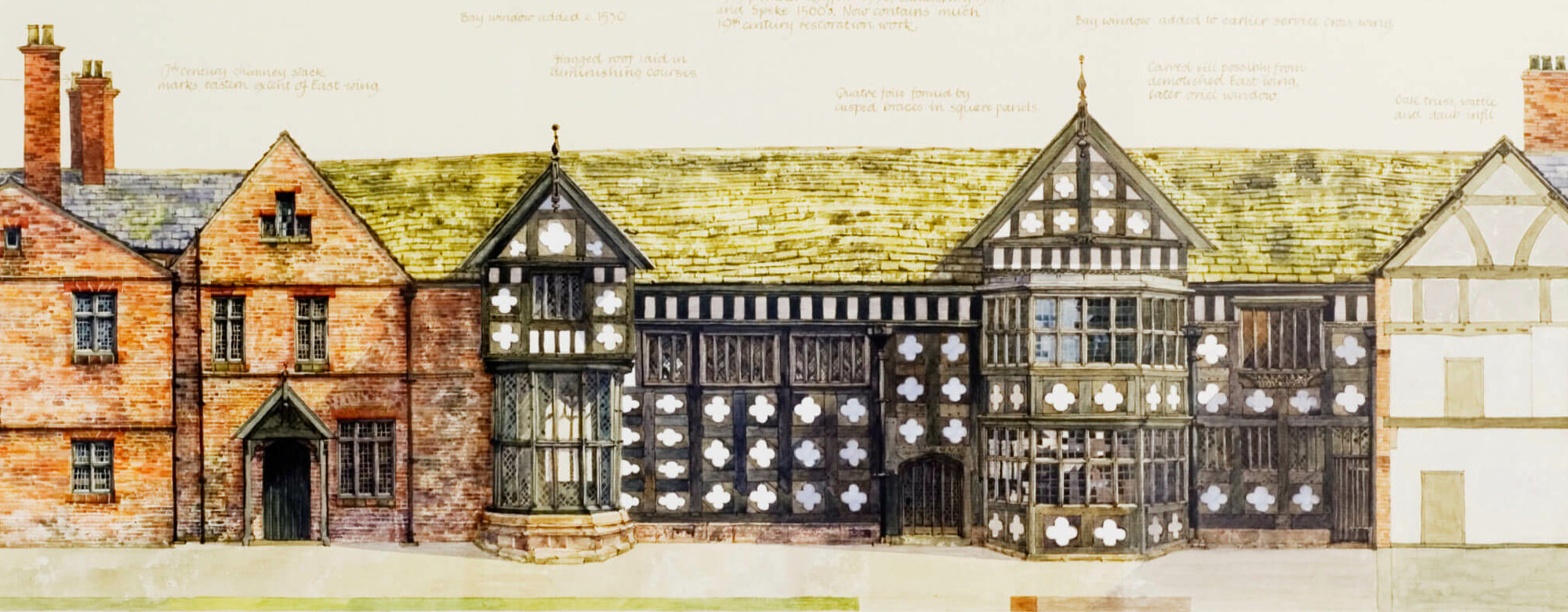
Parts of the 1300s east wing were demolished sometime between the late 1700s and the early 1800s.
The Radclyffe’s private chapel was the first known place of worship in the Salford Hundred (this was an area that covers most of what is now Greater Manchester). Its licence was granted in 1360.
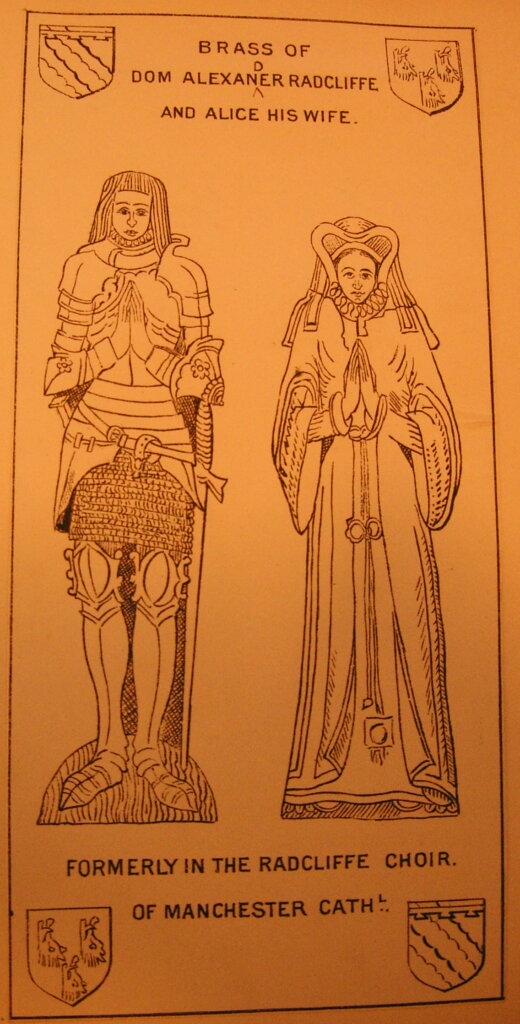
Successive generations of the Radclyffe family developed the Hall. In about 1510, the Great Hall was rebuilt by Sir Alexander Radclyffe (who died in 1549).
The earlier domestic apartments dating from the 1300s were kept but the kitchen and service wing (which included a buttery and a pantry for storing drink and food) were rebuilt. There would probably also have been a brewhouse and stables.
Under the Radclyffe’s ownership, Ordsall Hall was established as an important local seat. The family played a leading role in the region, and Sir Alexander (who died in 1549) was High Sheriff of Lancashire four times. His grandson, Sir John, (who died in 1590) was MP for Wigan from 1563-67.
A 1551 inventory of the belongings of Dame Anne, Sir William Radclyffe’s second wife (born around 1502 and died 1568) shows how rich the family were. She left about £200 worth of clothes, jewellery, and silverware (today this amount would be worth about £40,000).
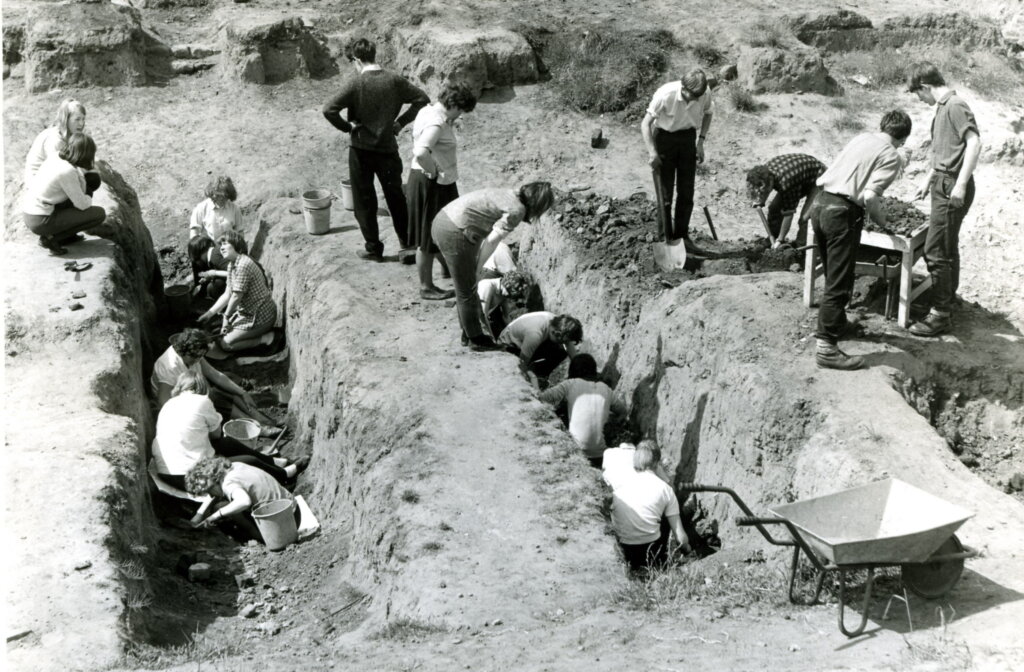
Archaeological excavations in the moat have uncovered fragments of high quality pottery from the 1500s and 1600s and a few fragments of glass. This indicates that the family drank from the most expensive decorated Venetian glass goblets. This wealth was all drawn from the Radclyffe’s lands; an inventory of 1599 shows that they owned hundreds of cattle and sheep.
From around 1500-1640, the time of its greatest prosperity, Ordsall Hall was one of nearly three dozen manor houses within a five mile radius. Other houses nearby included Agecroft Hall and Kersal Cell. The small town of Salford was a mile away. The Hall was the centre of a large self-contained community which included a farm, a chapel and, from the mid 1600s, a water mill for corn as well as a saw-mill and a brick kiln.
Although loyal to the crown, the Radclyffes defied the monarch’s wishes at this time and continued to practice the Catholic faith. In 1568, Sir John Radclyffe was described as “a dangerous temporiser”. This meant that he still followed the Catholic faith but that outwardly conformed to the Protestant faith.
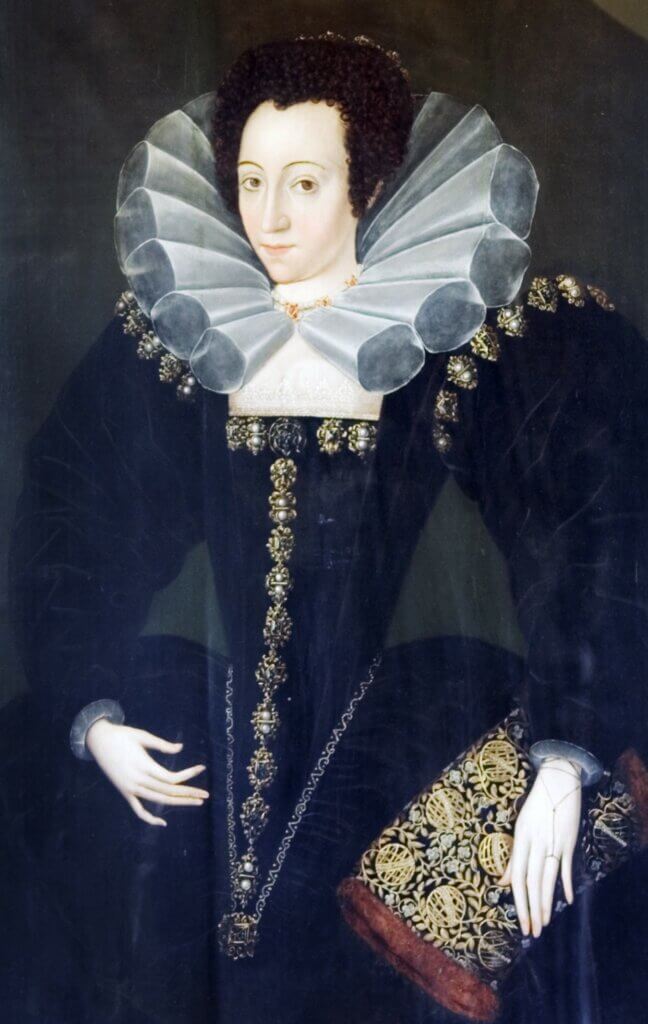
Margaret Radclyffe (1575-1599) and her brother Sir Alexander Radclyffe were extremely close. When he went to court he took Margaret with him.
Margaret was chosen by Queen Elizabeth I as one of her Maids of Honour. It was not long before she became a favourite of the Queen.
In 1599 Sir Alexander was killed whilst fighting in Ireland. Margaret was very upset by Alexander’s death and out of anxiety for her friend, Elizabeth I insisted that she was brought to Richmond Palace so that she could tend to her in person. Margaret died there on 10th November 1599. A post-mortem showed that she died of ‘strings around the heart’. Some historians believe these ‘strings’ were fatty deposits caused from starvation.
At the Queen’s command she was buried as a nobleman’s daughter in the Church of St. Margaret in London. At this service, 24 women were given gowns – one for each year of Margaret’s life.
When Margaret died, Queen Elizabeth I instructed the playwright, Ben Jonson, to write a tribute for her grave:
Rare as wonder was her wit
And like nectar ever flowing…
…Earth, thou hast not such another.
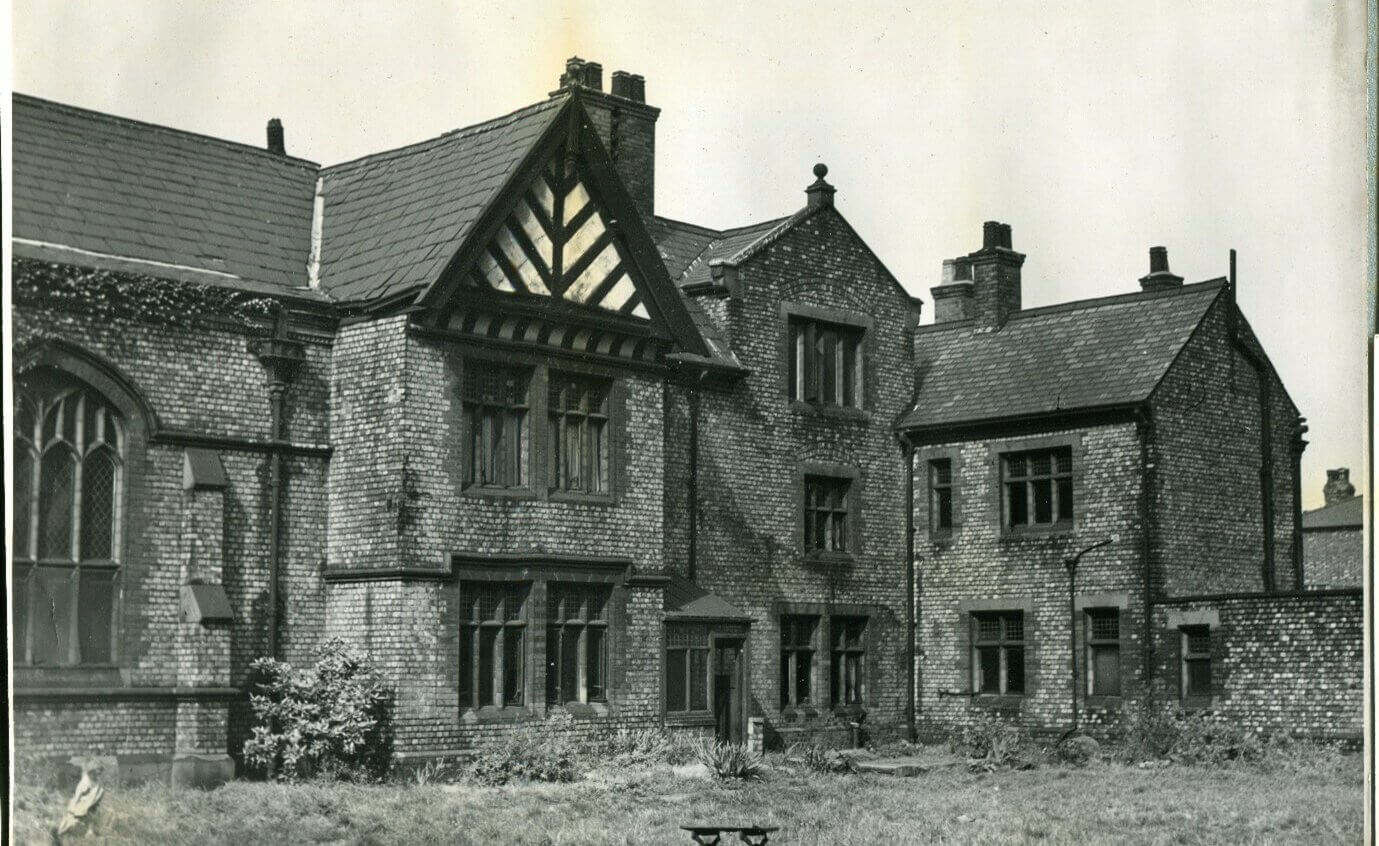
In the late 1630s Sir Alexander Radclyffe (who died in 1654) started work on a brick wing. This new wing was possibly on the site of an earlier structure. A sketch of the house on a 1740 map shows the Hall with two wings.
From the early 1600s, the Radclyffe fortunes began to decline as the family fell into debt. Part of the reason for this may be that some of the family still had to pay heavy fines for ‘recusancy’ meaning that they continued to practise the Catholic faith. It also seems likely that the prominent place taken by later generations of the family in Royal Court and social life involved considerable expense.
During the English Civil War (1642-49) the Radclyffes of Ordsall were Royalists (they supported the King). In 1642, one of the Royalist leaders, Lord Strange, was staying as a guest at the Hall when a group of local people (Parliamentarians) who supported Oliver Cromwell attacked it. Two months later, in September 1642, Lord Strange and Sir Alexander Radclyffe took part in an unsuccessful siege of Manchester. At this event, there was a fight in the streets and the first blood of the Civil War is said to have been spilt.
At the Battle of Edgehill in 1642 Sir Alexander was wounded and taken prisoner. His three horses were also seized and were ordered to be sent to London “for the service of the Commonwealth”. In November 1642 he was sent to the Tower of London. We don’t know how long Alexander remained in the Tower but records place him back in the Manchester area in 1653.
When he died, aged 45, Sir Alexander was laid to rest with his ancestors in the Radclyffe choir of Manchester’s collegiate church, now Manchester Cathedral, on April 14th 1654.
In 1658, Sir John Radclyffe (who died in 1669) mortgaged the rest of the estate including the Hall, water-mill, corn-mill and land for £3,600 to Edward Chetham. This ended over 300 years of ownership by the Radclyffe family.
In 1662 Ordsall Hall was sold to Colonel John Birch. He cleared the mortgages and left the estate to his daughter. During the next 100 years, the Hall changed hands a number of times.
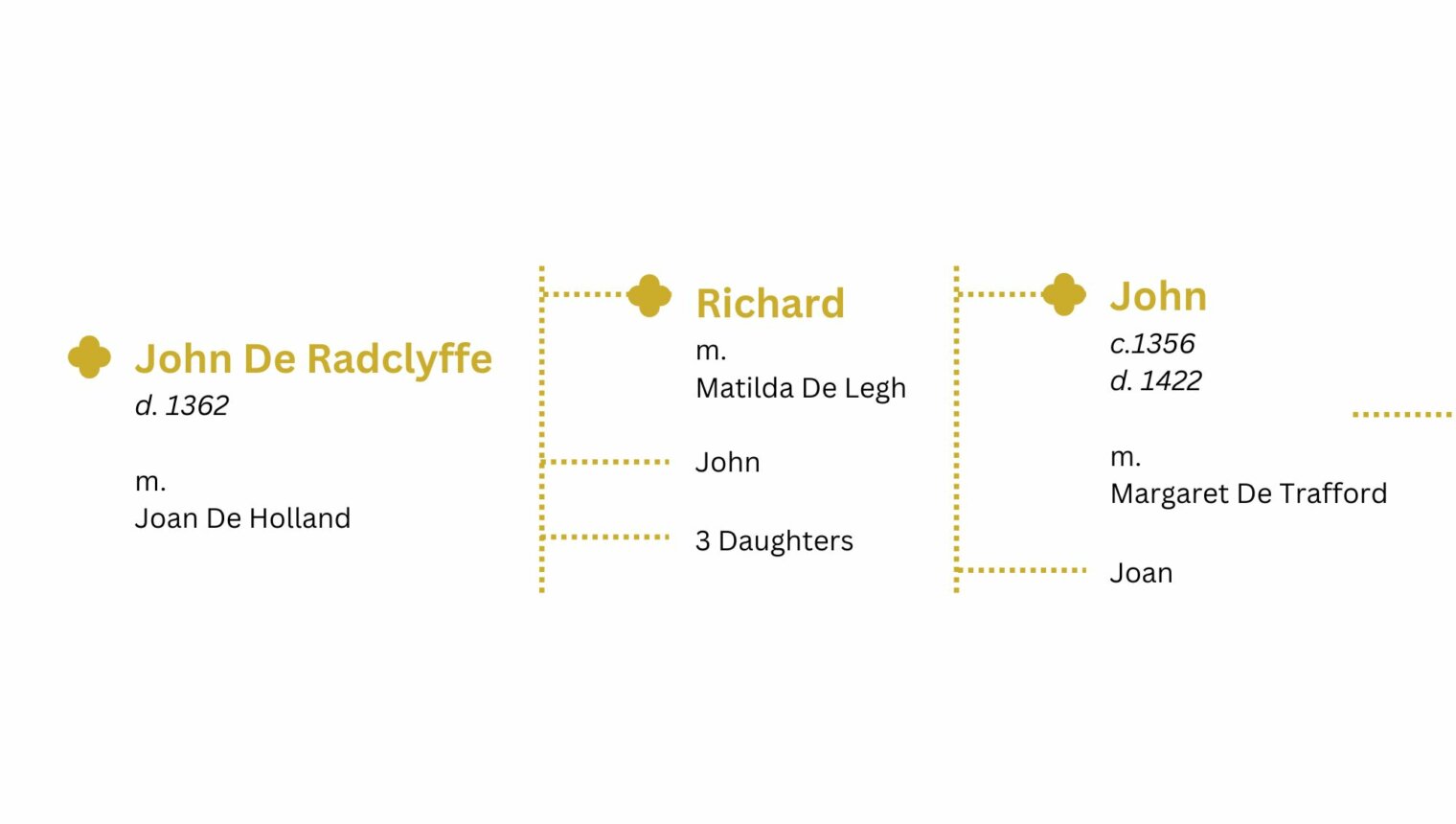
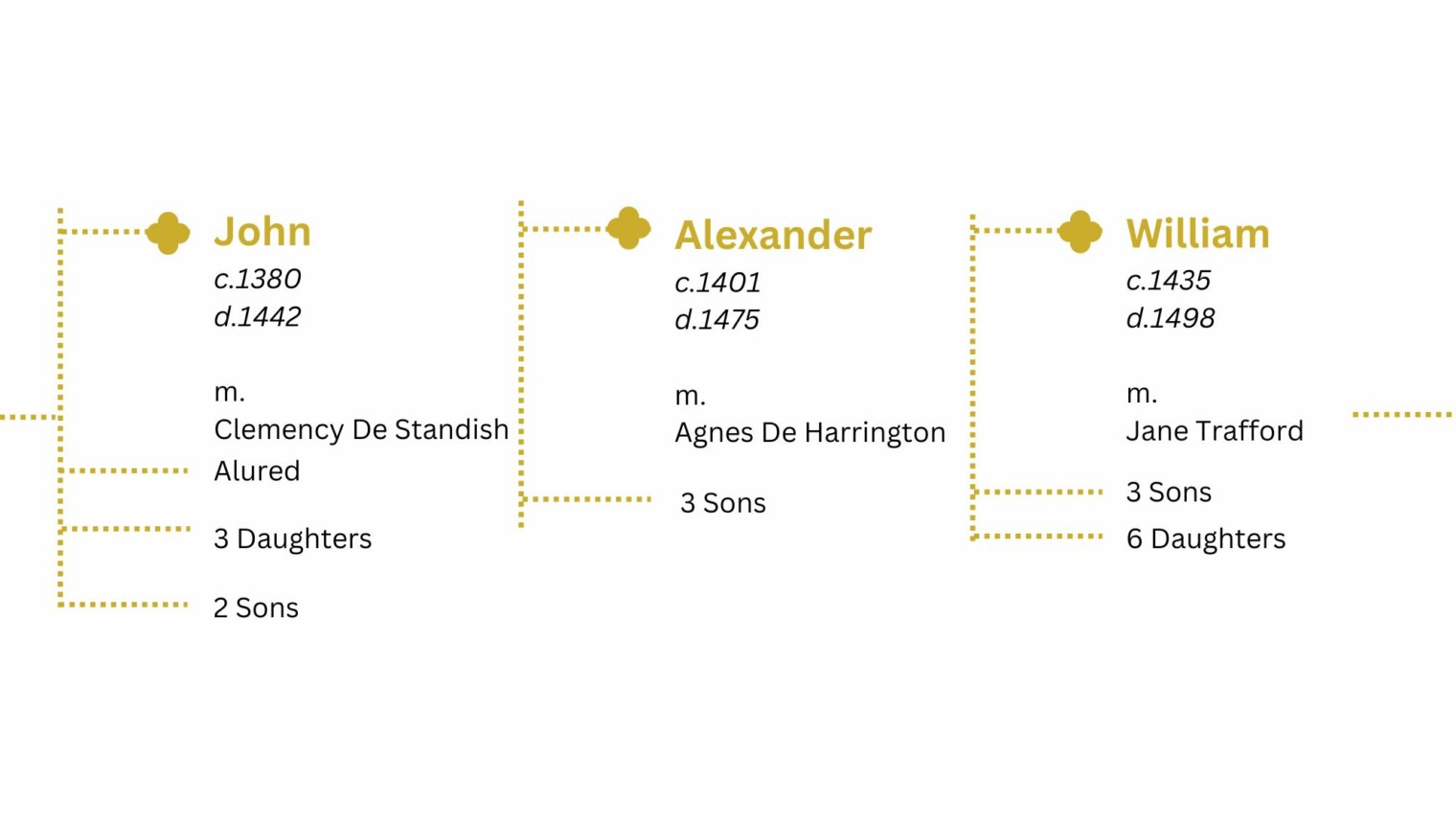
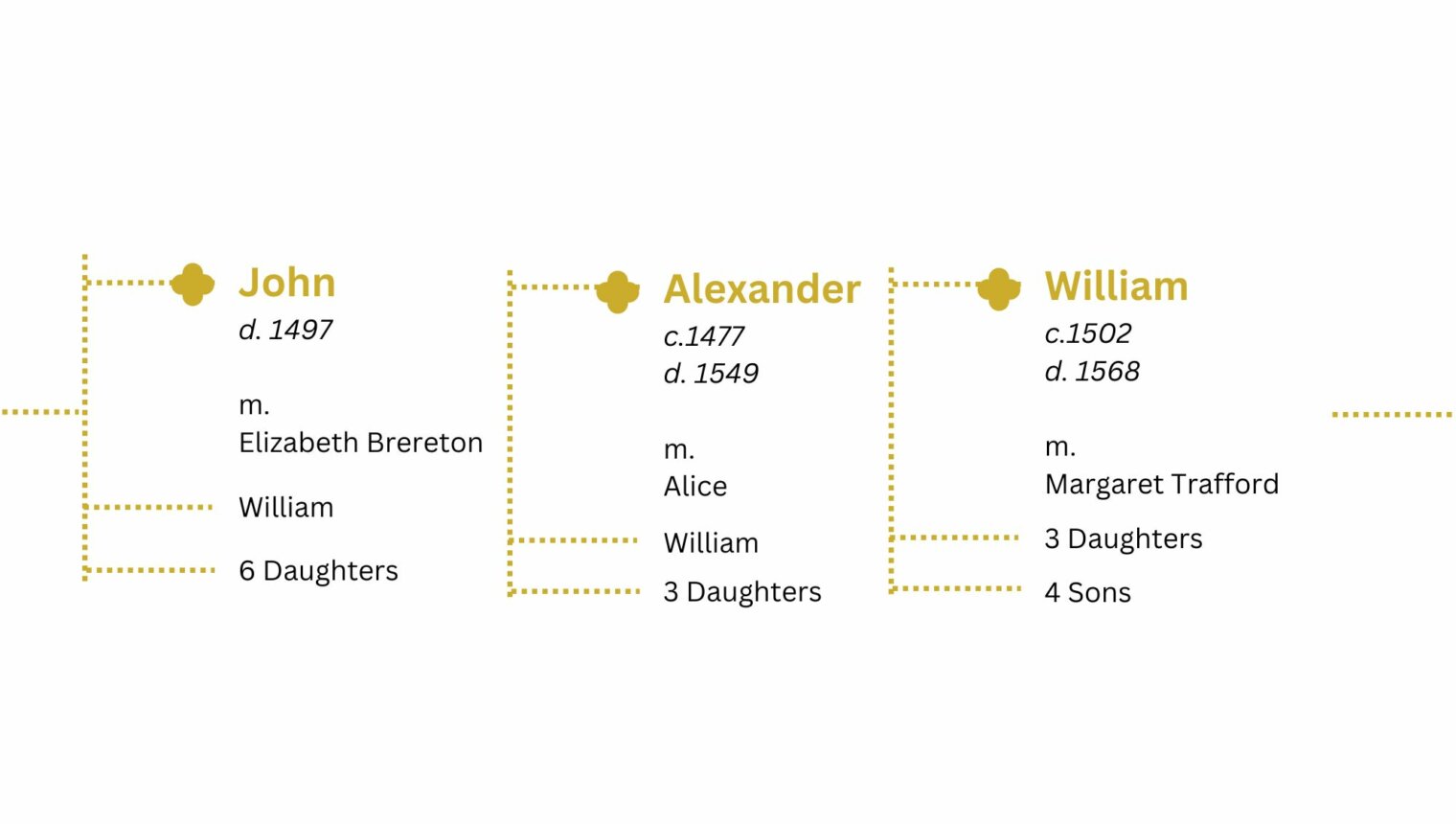
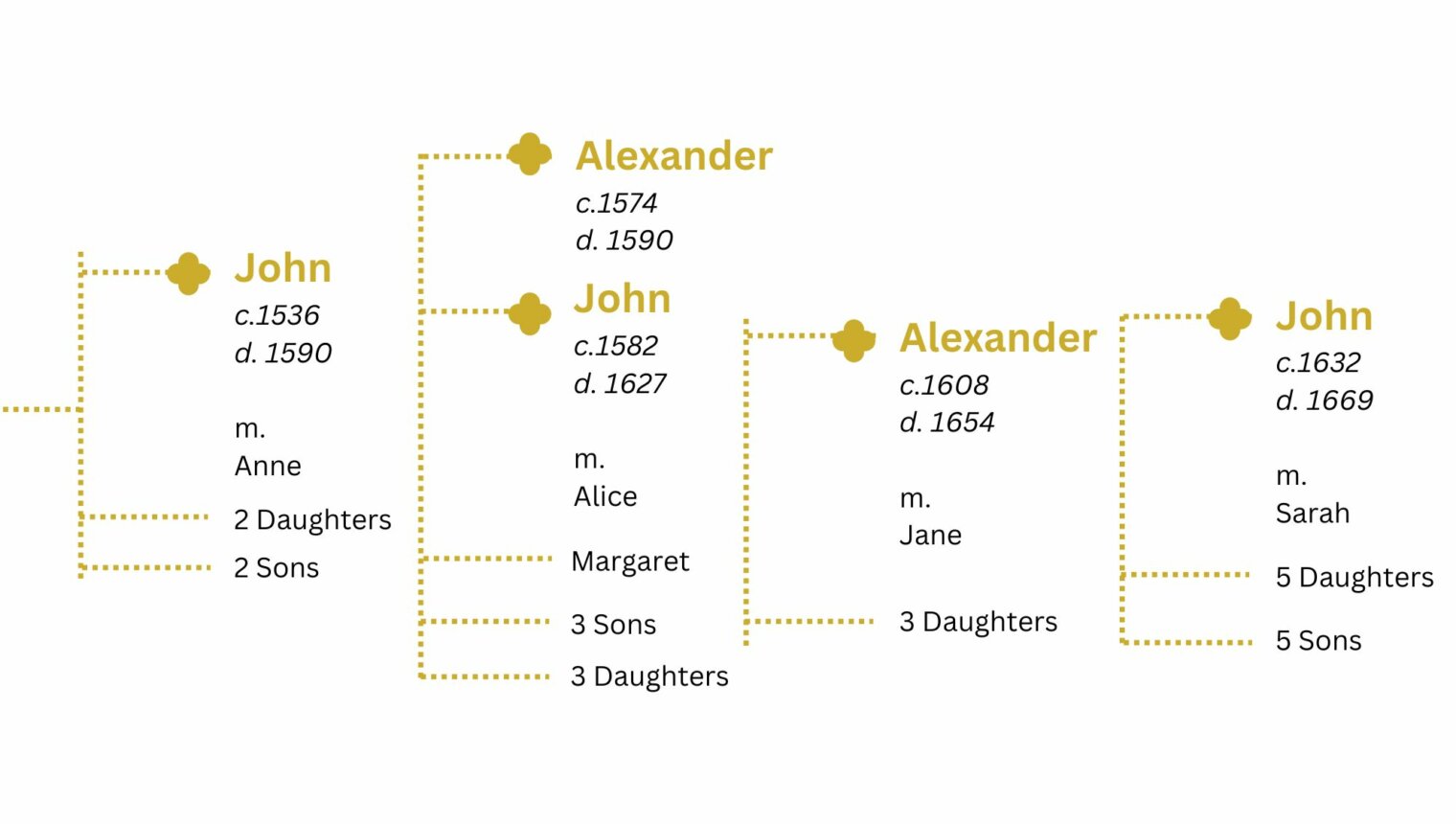
The diagram below shows 13 generations of the Radclyffe family. The family owned Ordsall Hall from 1335 until 1658.
Click here for a plain text version of the Radclyffe family tree.
Sign up to the Salford Community Leisure mailing list and be the first to find out about our latest news, offers and forthcoming events across our services.