Loading Events

Dawn Woolley presents familiar objects in an unfamiliar way, examining consumerism and branding through a queer feminist lens. Blurring the boundaries between portraiture and still-life, her work presents objects as bodies. Woolley’s artwork is unexpected, surprising, and sometimes unsettling.

This exhibition brings together five of the artist’s series’, along with new work each scrutinising elements of consumption. ‘Celebrate’ looks at contradictory and troubling relationships to consumerism; ‘Life Cycle’ portrays different ages of the female consumer; ‘Lure’ considers the alluring power of products; ‘Relics’ inspects dominant gender stereotypes in branding; and ‘Host Figures [They Live]’ looks at how gender specific toys and sweets can influence behaviour from an early age.

A series of new sculptures focus on consumer waste and environmental impact. Papier mâché ‘Storm Birds’ perch on abandoned shopping baskets and trolleys. Birds such as crows, magpies and seagulls appear in mythology and folklore from across the globe as symbols of war, wisdom, wealth, prosperity, death, rebirth, virtue, patience and protection. They are also opportunistic scavengers that have flourished in man-made environments characterised by concrete, pollution and litter. Perhaps due to their ability to straddle heaven and earth, birds have many mythic associations with weather, predicting flooding, causing cold weather and summoning thunderstorms. This variety of meanings make them ideal characters to carry mixed messages about equality, freedom of speech and environmental catastrophe – as they are often expressed by newspapers. The birds guard, or perhaps collect ‘Survivors’, votive paintings on flattened tin cans featuring species that will flourish due to climate change.

The birds are accompanied by plastic banners and paintings decorated with text from The Waste Makers, written by Vance Packard in 1959. In the book Packard warns us of the perils of mass consumption. However, when read against the grain it becomes a handbook for the systematic exploitation of people and environments.

The exhibition also features a new series of Relics artefacts made from rubbish collected between the gallery and Manchester Victoria station. Woolley looks for processes that won’t contribute to waste. Collecting litter means that she can reuse things that already exist, while also reducing the pollution around the gallery. Reminiscent of devotional artefacts such as totems, janus figures, and votive candles, these Relics are not sacred objects that are preserved for centuries because they are culturally significant. They are relics of consumerism: our legacy for future generations. They also provide a sort of portrait of who inhabits the streets and how they use them.

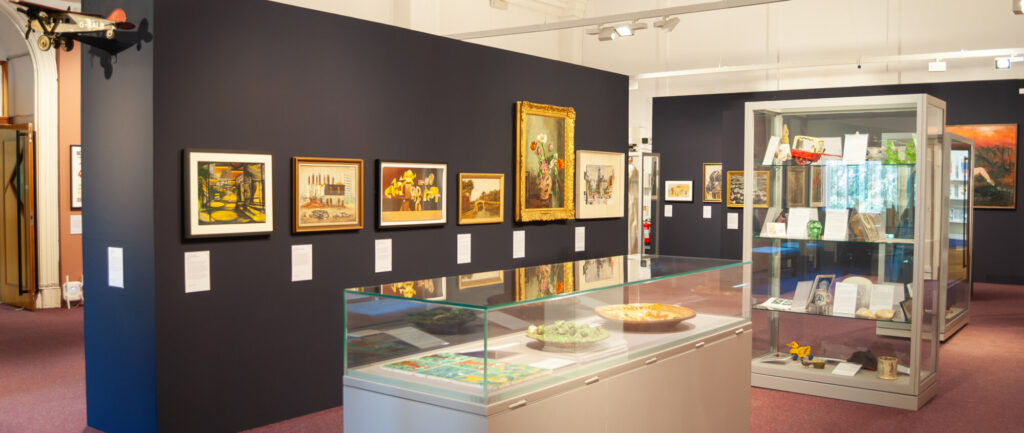
Woolley is influenced by artworks throughout history including 17th century still life paintings, and works from the 19th and 20th centuries, some of which are included from the museum’s collections. Like Woolley’s artwork, 17th century still-life paintings are portraits of a consumer, described by the objects they own. In contrast, ‘Variation on Red’ by Marion Adnams and ‘Phenomenon I’ by Derek Greenhalgh both represent the body using objects. Similar to Woolley’s ‘Celebrate’ and ‘Lifecycle’ series’, these paintings represent bodies through objects in a way that makes the objects unfamiliar and strange.

On display in our North Gallery from 2 May to 30 August 2026.